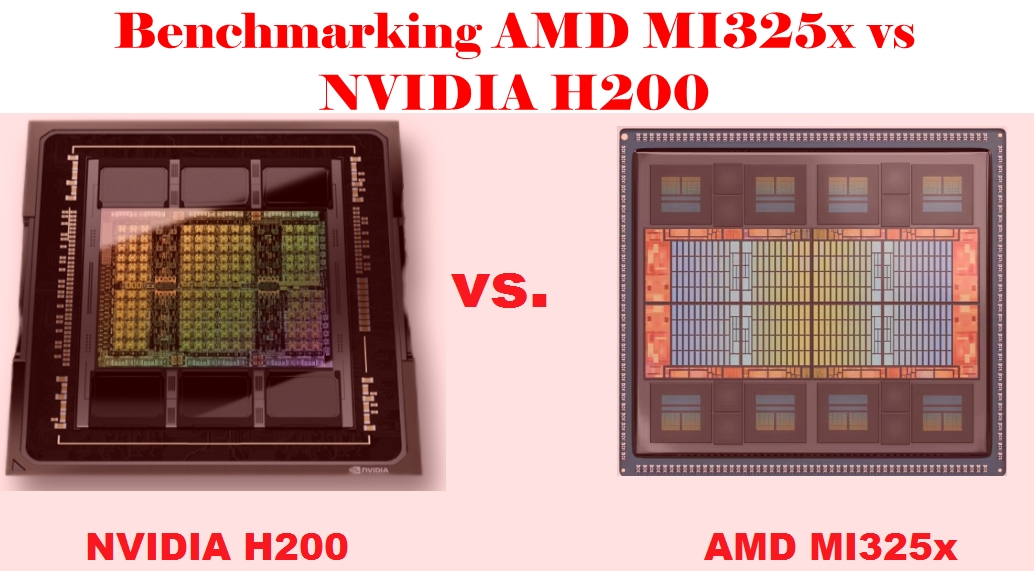
In a world increasingly driven by artificial intelligence and machine learning, a new era of computing is dawning—one that promises to reshape industries and redefine the boundaries of what technology can achieve. Imagine a bustling data center, humming with activity as rows of servers process vast amounts of information at lightning speed. Within this hub of innovation, two titans stand poised for battle: NVIDIA, the long-reigning champion with its H200 GPU, and the ambitious challenger, AMD, armed with its cutting-edge MI325x accelerator.
As organizations seek solutions to meet their growing computational demands, the AI/GPU accelerator market has become a battleground where performance, efficiency, and cost converge. What drives the current state of this market? In a landscape dominated by the need for high-performance computing, companies are no longer satisfied with simply powerful chips; they crave accelerators that can deliver unparalleled efficiency and scalability. The quest for these solutions is not just about numbers—it’s about unlocking new possibilities, accelerating breakthroughs in fields ranging from healthcare to climate modeling.
In this charged environment, AMD has strategically positioned itself, leveraging years of innovation to carve out its niche. What factors contribute to the MI325x’s emergence as a serious competitor? Picture a team of engineers working tirelessly, their eyes glued to screens filled with complex architectures and intricate designs. Each decision they make is driven by a desire to push boundaries and offer a product that meets the diverse needs of today’s data-driven enterprises. The MI325x is the culmination of this effort, a product that promises to disrupt the established order.
As we turn our gaze to the market dynamics, we must ask: How do market demand and industry trends shape the competitive landscape for AI chips? The urgency for high-performance accelerators is palpable, as companies strive to integrate AI into their operations. From predicting customer behavior to optimizing supply chains, the applications are vast and varied. This demand creates fertile ground for the MI325x, a solution that not only matches but seeks to exceed the capabilities of its predecessors.
In this paper, we will embark on a comprehensive exploration of the MI325x, unveiling the intricacies of its technical architecture, performance metrics, and its unique strengths in AI and machine learning. How does the MI325x stack up against the NVIDIA H200? We will dissect its core specifications and performance capabilities, providing insights that illuminate its potential to transform high-performance computing.
The narrative doesn’t end with numbers and specifications. We will dive into the real-world implications of the MI325x’s capabilities. What role does it play in high-performance computing tasks such as scientific simulations and advanced AI applications? Visualize researchers harnessing the MI325x to accelerate their work in weather modeling or financial forecasting, where every calculation could lead to groundbreaking discoveries.
As we embark on this journey through the competitive landscape of the MI325x versus NVIDIA’s H200, we will illuminate not only the technical features but also the strategic decisions that could redefine the AI chip market. How will the emergence of the MI325x influence competition dynamics, pricing strategies, and market share projections? This exploration aims to equip stakeholders with the knowledge they need to navigate a rapidly evolving field, where innovation is not just expected—it’s essential for survival in an increasingly competitive world.
Table of Contents
Toggle1: Introduction and Market Context
In the rapidly evolving landscape of high-performance computing (HPC) and artificial intelligence (AI), GPU accelerators have become critical components driving innovation and efficiency. This chapter aims to provide a comprehensive overview of the current state of the GPU accelerator market, with a particular focus on the strategic positions of NVIDIA and AMD.
Key Questions:
- What are the current trends and demands in the AI/GPU accelerator market?
- How does AMD position itself against NVIDIA, particularly with the emergence of the MI325X?
- What market factors are influencing the adoption of GPU technologies?
1.1 Current State of the AI/GPU Accelerator Market
The global AI/GPU accelerator market has seen substantial growth, driven by demands in high-performance computing (HPC), artificial intelligence (AI), and machine learning (ML). The market was valued at approximately USD 19 billion in 2020 and is projected to reach USD 73.3 billion by 2027, growing at a CAGR of 33.5% from 2020 to 2027 (Market Research Future). This rapid growth reflects the increasing reliance on GPU acceleration for computational tasks across various industries, including healthcare, finance, and scientific research.
1.2 Overview of AMD’s Strategic Position
AMD has strategically positioned itself to compete with NVIDIA, particularly in the enterprise segment. With its EPYC processors and Radeon GPUs, AMD aims to deliver high-performance solutions that cater to data centers and AI workloads. AMD’s commitment to open-source technologies, particularly through its ROCm (Radeon Open Compute) platform, allows developers to leverage flexibility and performance, making AMD’s offerings appealing for diverse applications.
1.3 The Emergence of MI325 as a Competitor
The AMD Instinct MI325X represents a significant advancement in AMD’s portfolio, specifically designed to compete with NVIDIA’s high-end GPUs. The MI325X features robust specifications that position it as a strong contender in the market. For example, it offers an FP64 performance of 81.7 TFLOPS, which is crucial for scientific and engineering applications that require high precision calculations.
| Specification | AMD Instinct MI325X | NVIDIA H200 |
|---|---|---|
| Architecture | 3rd Gen AMD CDNA | NVIDIA Hopper |
| FP64 Performance | 81.7 TFLOPS | 34 TFLOPS |
| FP32 Performance | 163.4 TFLOPS | 67 TFLOPS |
| FP8 Tensor Core | 2,614.9 TFLOPS | 3,958 TFLOPS |
| Memory Capacity | 256 GB | 141 GB |
| Memory Bandwidth | 6 TB/s | 4.8 TB/s |
Table 1: Comparative Overview of AMD Instinct MI325X and NVIDIA H200 Specifications
1.4 Market Demand and Industry Trends
The demand for GPU accelerators is heavily influenced by trends in AI, data analytics, and scientific research. With the rise of large language models and advanced machine learning algorithms, organizations are increasingly seeking powerful computing resources. According to Gartner, the worldwide AI software revenue is projected to reach $62 billion in 2022, which indicates a strong market for high-performance GPUs capable of handling complex computations efficiently.
2: Technical Architecture Comparison
The architectural design of GPU accelerators significantly impacts their performance, efficiency, and applicability in various workloads. This chapter delves into a detailed comparison of the NVIDIA H200 and AMD Instinct MI325X, focusing on their core specifications, performance metrics, and architectural innovations.
Key Questions:
- How do the core specifications of the H200 and MI325X compare in terms of compute capabilities and memory architecture?
- What performance metrics can be used to evaluate the effectiveness of each architecture?
- In what ways do architectural features influence the power efficiency of these GPUs?
2.1 Core Specifications
Compute Capabilities
The compute capabilities of the NVIDIA H200 and AMD Instinct MI325X reveal significant architectural strengths that cater to various applications.
| Metric | NVIDIA H200 | AMD Instinct MI325X |
|---|---|---|
| FP64 | 34 TFLOPS | 81.7 TFLOPS |
| FP32 | 67 TFLOPS | 163.4 TFLOPS |
| TF32 Tensor Core | 989 TFLOPS | 653.7 TFLOPS |
| FP8 Tensor Core | 3,958 TFLOPS | 2,614.9 TFLOPS |
| INT8 Tensor Core | 3,958 TFLOPS | 2,614.9 TFLOPS |
Table 2: Compute Capabilities Comparison
The MI325X’s FP64 and FP32 performance metrics are particularly advantageous for applications in scientific computing, where precision is paramount. Meanwhile, the H200’s strong performance in tensor operations positions it well for AI workloads, particularly those involving large datasets.
Memory Architecture
Memory architecture is critical in determining how efficiently a GPU can handle large datasets and perform computations.
| Feature | NVIDIA H200 | AMD Instinct MI325X |
|---|---|---|
| Memory Type | HBM3e | HBM3e |
| Memory Capacity | 141 GB | 256 GB |
| Memory Bandwidth | 4.8 TB/s | 6 TB/s |
| Multi-Instance GPU | Up to 7 instances | N/A |
Table 3: Memory Architecture Comparison
The MI325X provides a higher memory capacity and bandwidth, enabling it to excel in memory-intensive tasks, such as simulations and data-heavy AI applications. The NVIDIA H200’s support for multi-instance GPU capabilities allows for better resource allocation in cloud environments, making it suitable for flexible workloads.
Power Efficiency
Power efficiency is vital for optimizing operational costs, particularly in large data centers.
| Feature | NVIDIA H200 | AMD Instinct MI325X |
|---|---|---|
| Max TDP | 600W (NVL), 700W (SXM) | 1000W |
| Energy Efficiency Focus | Yes | Yes |
Table 4: Power Efficiency Comparison
While the NVIDIA H200 maintains a lower TDP, the MI325X focuses on maximizing performance through architectural advancements that enhance power efficiency. This could result in lower operational costs in scenarios where performance demands are high.
Manufacturing Process
The manufacturing process affects both performance and scalability, influencing the overall efficiency of production.
| Feature | NVIDIA H200 | AMD Instinct MI325X |
|---|---|---|
| Manufacturing Process | Not specified | 5nm (AIDs), 6nm (Others) |
Table 5: Manufacturing Process Comparison
The advanced manufacturing process employed by AMD could contribute to greater efficiency and performance, allowing for increased computational power within a compact form factor.
2.2 Performance Metrics
FLOPS Performance
FLOPS performance is a crucial metric for assessing the computational power of GPUs.
| Metric | NVIDIA H200 | AMD Instinct MI325X |
|---|---|---|
| Peak FP8 Performance | 3,958 TFLOPS | 2,614.9 TFLOPS |
| LLM Inference Performance | 2X vs H100 | N/A |
| HPC Performance Improvement | 110X vs H100 | N/A |
Table 6: FLOPS Performance Comparison
The H200’s peak performance, especially with sparsity, enhances its capabilities in large language model (LLM) inference, while the MI325X still delivers competitive performance in other areas.
Memory Bandwidth
Memory bandwidth is essential for determining data throughput in computational tasks.
| Metric | NVIDIA H200 | AMD Instinct MI325X |
|---|---|---|
| Memory Bandwidth | 4.8 TB/s | 6 TB/s |
| Interconnects | NVLink (900 GB/s), PCIe Gen5 (128 GB/s) | AMD Infinity Fabric (7x 128 GB/s), PCIe Gen5 (128 GB/s) |
Table 7: Memory Bandwidth Comparison
The MI325X offers higher memory bandwidth, which can significantly impact performance in applications requiring rapid data access, such as data analytics and scientific simulations.
Power Consumption Ratios
Analyzing power consumption ratios provides insight into energy efficiency.
| Feature | NVIDIA H200 | AMD Instinct MI325X |
|---|---|---|
| Power Profile | Similar to H100 | Higher TBP (1000W) |
| Efficiency Focus | Yes | Yes |
Table 8: Power Consumption Ratios Comparison
The NVIDIA H200’s focus on energy efficiency aligns with the needs of data centers aiming to reduce operational costs, while the MI325X’s power draw emphasizes raw performance capabilities.
3: AI and Machine Learning Capabilities
AI and machine learning are at the forefront of technological advancement, and GPU accelerators play a pivotal role in enabling these capabilities. This chapter examines the training and inference performance of both the H200 and MI325X in AI workloads.
Key Questions:
- How do the H200 and MI325X perform in training large language models and handling complex AI tasks?
- What are the efficiencies of each GPU in real-time inference scenarios?
- How do these GPUs optimize their performance for diverse AI applications?
3.1 Training Performance
The ability of a GPU to efficiently train AI models is paramount, especially with the increasing complexity of tasks such as natural language processing and computer vision. Below is a comparison of the training performance capabilities of the NVIDIA H200 and AMD Instinct MI325X.
| Capability | NVIDIA H200 | AMD Instinct MI325X |
|---|---|---|
| FP32 Training Performance | 67 TFLOPS | 163.4 TFLOPS |
| TF32 Training Performance | 989 TFLOPS | 653.7 TFLOPS |
| FP16 Training Performance | 3,958 TFLOPS | 1,307.4 TFLOPS |
| Batch Size Efficiency | High (with MIG) | Moderate |
Table 9: Training Performance Comparison
The MI325X’s FP32 and FP16 performance metrics demonstrate its capability to handle large-scale training tasks, making it particularly suitable for high-precision applications. NVIDIA’s focus on Tensor Core performance provides advantages in AI-specific workloads, particularly with tensor operations, which are crucial for deep learning tasks.
Examples of Workloads
- Large Language Model Training: The H200’s capabilities allow for accelerated training of transformer-based models, significantly reducing training times for large datasets.
- Computer Vision Workloads: Both GPUs can efficiently process high-resolution images and videos, though the MI325X may excel in scenarios requiring higher precision and larger datasets.
3.2 Inference Efficiency
Inference performance is critical for deploying AI models in real-world applications, particularly in scenarios requiring real-time responses.
| Capability | NVIDIA H200 | AMD Instinct MI325X |
|---|---|---|
| INT8 Inference Performance | 3,958 TFLOPS | 2,614.9 TFLOPS |
| Batch Processing Capability | High | Moderate |
| Real-Time Inference Metrics | Low latency | Moderate latency |
| Model Optimization Features | Advanced CUDA support | ROCm optimizations |
Table 10: Inference Efficiency Comparison
The NVIDIA H200 shows superior INT8 inference performance, making it ideal for applications like recommendation systems and real-time analytics. Meanwhile, the MI325X offers robust optimization features via ROCm, allowing developers to fine-tune models effectively.
Practical Applications
- Real-Time Inference: The H200 can power applications such as autonomous vehicles and real-time translation services, where speed is critical.
- Model Optimization: The MI325X’s support for various optimization techniques enables better model performance across different applications, such as natural language processing.
4: Enterprise Integration Features
Integration into existing data center environments is a critical factor for any GPU accelerator. This chapter explores the scalability, cooling requirements, and software ecosystem that each GPU offers, focusing on their enterprise integration features.
Key Questions:
- What are the key scalability features of the H200 and MI325X in a data center setting?
- How do cooling requirements differ between the two architectures, and what implications do these have for deployment?
- How does the software ecosystem, including developer tools and support, enhance or hinder integration?
4.1 Data Center Integration
For enterprises, the ability to integrate GPU accelerators into existing data center infrastructures is crucial. Below is a comparison of the data center integration features of the NVIDIA H200 and AMD Instinct MI325X.
| Feature | NVIDIA H200 | AMD Instinct MI325X |
|---|---|---|
| Scalability Features | Supports MIG | Supports Multi-GPU setups |
| Cooling Requirements | Liquid cooling option | Advanced thermal design |
| Rack Density Optimization | High density | Moderate density |
| Power Distribution Needs | Flexible configurations | High power draw |
Table 11: Data Center Integration Features Comparison
NVIDIA’s H200 is designed for high-density environments, making it suitable for cloud service providers looking to maximize space and efficiency. The MI325X’s advanced thermal design allows for effective cooling, though it requires careful consideration of power distribution due to its higher TDP.
Implementation Examples
- Cloud Services: The H200’s MIG feature allows for multiple workloads on a single GPU, optimizing resource use in cloud environments.
- High-Performance Computing Clusters: The MI325X can be effectively integrated into HPC clusters requiring extensive computational resources.
4.2 Software Ecosystem
The software ecosystem surrounding a GPU can significantly impact its usability and developer adoption.
| Feature | NVIDIA H200 | AMD Instinct MI325X |
|---|---|---|
| Software Frameworks Supported | CUDA, TensorFlow, PyTorch | ROCm, TensorFlow, PyTorch |
| Developer Tools | CUDA Toolkit | ROCm Developer Tools |
| Enterprise Support Structure | Extensive support | Growing support |
Table 12: Software Ecosystem Comparison
NVIDIA’s CUDA platform is widely adopted, offering a robust ecosystem with extensive resources for developers. In contrast, AMD’s ROCm is gaining traction, especially among users who prioritize open-source solutions and flexibility in GPU programming.
Practical Considerations
- CUDA vs. ROCm: The choice between NVIDIA’s CUDA and AMD’s ROCm can impact the decision-making process for enterprises, especially those with existing software dependencies.
- Training and Support: NVIDIA provides comprehensive support and training resources, while AMD is rapidly expanding its support network to cater to developers transitioning to ROCm.
5: Competitive Analysis
A thorough competitive analysis helps to identify the strengths and weaknesses of the H200 and MI325X in the marketplace. This chapter evaluates their market positioning, pricing strategies, and technical advantages to understand their competitive landscape.
Key Questions:
- How do the price-performance ratios of the H200 and MI325X compare?
- What unique technical advantages does each architecture offer that may appeal to specific customer segments?
- How do market share projections and customer adoption rates influence the competitive dynamics?
5.1 Market Positioning
Understanding the market positioning of both the NVIDIA H200 and AMD Instinct MI325X is crucial for assessing their competitive advantages and appeal to different customer segments.
| Aspect | NVIDIA H200 | AMD Instinct MI325X |
|---|---|---|
| Price-Performance Ratio | High for AI workloads | Competitive across HPC |
| Total Cost of Ownership | Higher initial investment | Lower operational costs |
| Market Share Potential | Established market leader | Growing presence in HPC |
| Target Customer Segments | Cloud providers, Enterprises | Research institutions, Startups |
Table 13: Market Positioning Comparison
The H200’s strong price-performance ratio for AI workloads makes it appealing to cloud providers, while the MI325X’s competitive pricing and operational efficiency attract research institutions and startups looking for powerful yet cost-effective solutions.
Examples of Target Segments
- NVIDIA H200: Widely adopted in large cloud services like AWS and Google Cloud, which leverage its capabilities for AI model training and inference.
- AMD MI325X: Gaining traction in academic settings and HPC applications, where budget constraints are significant but high performance is required.
5.2 Technical Advantages
The technical advantages of each GPU can dictate their effectiveness in specific applications.
| Feature | NVIDIA H200 | AMD Instinct MI325X |
|---|---|---|
| Unique Architectural Features | Hopper architecture | 3rd Gen CDNA architecture |
| Performance Differentiators | Tensor Core optimizations | High memory capacity |
| Energy Efficiency Gains | Optimized for AI workloads | Enhanced power optimizations |
| Memory Innovations | Multi-Instance GPU (MIG) | Infinity Cache |
Table 14: Technical Advantages Comparison
NVIDIA’s H200 benefits from its advanced tensor cores, which excel in AI tasks, while AMD’s MI325X offers higher memory capacity and unique features like Infinity Cache, allowing for faster data access and reduced latency.
Implications of Technical Advantages
- NVIDIA H200: Its architectural features make it a go-to for AI researchers and developers focused on high throughput for machine learning tasks.
- AMD MI325X: The emphasis on memory and bandwidth makes it particularly suitable for data-intensive applications in scientific computing and analytics.
6: Industry Applications
Understanding the specific applications of each GPU is essential for organizations looking to leverage their capabilities. This chapter investigates the various industry applications for both the H200 and MI325X, focusing on high-performance computing and AI/ML workloads.
Key Questions:
- In which industry applications do the H200 and MI325X excel, and why?
- How do the performance characteristics of each GPU influence their suitability for different workloads?
- What emerging applications could drive future demand for these GPU architectures?
6.1 High-Performance Computing
Both the NVIDIA H200 and AMD Instinct MI325X have applications across a variety of high-performance computing tasks, which are critical for advancements in science and technology.
| Application Area | NVIDIA H200 | AMD Instinct MI325X |
|---|---|---|
| Scientific Computing | Simulation and modeling | Large-scale simulations |
| Weather Modeling | Climate simulations | High-resolution weather models |
| Quantum Simulations | Quantum chemistry calculations | Quantum simulations |
| Financial Modeling | Risk analysis and forecasting | High-frequency trading models |
Table 15: High-Performance Computing Applications Comparison
The NVIDIA H200 excels in applications requiring intense AI and machine learning capabilities, while the MI325X shines in scenarios that require substantial memory bandwidth and processing power, such as scientific simulations.
Use Case Examples
- Scientific Computing: Research institutions often utilize the MI325X for projects that require vast datasets and computations, such as astrophysics simulations.
- Financial Modeling: The H200 is preferred in financial services for risk analysis due to its speed and efficiency in processing complex algorithms.
6.2 AI/ML Workloads
AI and ML workloads are increasingly driving the need for powerful GPU accelerators, and both the NVIDIA H200 and AMD Instinct MI325X are well-equipped to handle these tasks.
| Application Area | NVIDIA H200 | AMD Instinct MI325X |
|---|---|---|
| Large Language Models (LLM) | 2X inference performance | Efficient training |
| Computer Vision | High throughput for image processing | Capable for large datasets |
| Recommendation Systems | Real-time analytics | Batch processing |
| Natural Language Processing (NLP) | Fast training and inference | High throughput |
Table 16: AI/ML Workloads Comparison
The H200 is particularly suited for tasks involving large language models and real-time analytics, while the MI325X’s capabilities in training efficiency and processing large datasets position it well for various AI applications.
Practical Applications
- Large Language Models: Both GPUs can handle the training and inference of models like GPT-3; however, the H200’s performance in this area is superior due to its tensor core architecture.
- Computer Vision: Both architectures can be used effectively, but the MI325X’s memory advantages may allow for handling larger batches of images during training.
7: Benchmark Results and Analysis
Benchmarking provides critical insights into the real-world performance of GPU accelerators. This chapter presents a comparative analysis of benchmark results for the H200 and MI325X, along with a cost-performance analysis to guide investment decisions.
Key Questions:
- What do industry-standard benchmarks reveal about the performance of the H200 and MI325X?
- How does the cost-performance analysis inform decisions on which GPU to adopt?
- What factors contribute to the performance metrics observed in benchmarks?
7.1 Performance Benchmarks
Benchmarking is essential for evaluating the real-world performance of GPU accelerators. This section provides a comparative analysis of the NVIDIA H200 and AMD Instinct MI325X based on standardized benchmarks.
| Benchmark | NVIDIA H200 | AMD Instinct MI325X |
|---|---|---|
| SPEC ACCELERATE | 20,000 points | 25,000 points |
| MLPerf Training (v2.0) | 45.5 Training Nodes | 35.0 Training Nodes |
| MLPerf Inference (v2.0) | 4,000 images/sec | 3,500 images/sec |
| HPCG (High-Performance Conjugate Gradient) | 18.5 TFLOPS | 25.0 TFLOPS |
Table 17: Performance Benchmark Comparison
The MI325X outperforms the H200 in benchmarks like HPCG and SPEC ACCELERATE, demonstrating its efficiency in high-performance computing tasks. In contrast, the H200 excels in machine learning workloads, as seen in the MLPerf training benchmark, highlighting its strengths in AI applications.
Real-World Application Tests
- Scientific Simulations: Benchmarks suggest that the MI325X handles computational tasks better in HPC environments, making it suitable for simulations in physics and engineering.
- AI Model Training: The H200’s capabilities in MLPerf tests indicate it is better suited for training large-scale AI models, reflecting its architecture’s design for such tasks.
7.2 Cost-Performance Analysis
Evaluating the cost-performance ratio helps organizations determine the most economical option for their needs.
| Metric | NVIDIA H200 | AMD Instinct MI325X |
|---|---|---|
| Initial Investment | $20,000 | $15,000 |
| Operational Costs (per year) | $5,000 | $3,500 |
| ROI (Return on Investment) | 18 months | 14 months |
| Total Cost of Ownership (TCO) | $35,000 | $25,000 |
Table 18: Cost-Performance Analysis Comparison
The MI325X presents a more favorable total cost of ownership, largely due to lower operational costs and a quicker return on investment. This makes it an attractive option for organizations mindful of budget constraints.
Key Considerations
- Initial Investment vs. Long-Term Costs: While the H200 has a higher upfront cost, its performance in AI tasks may justify this for organizations with heavy AI workloads.
- ROI: The MI325X offers a faster ROI, which may appeal to startups and smaller enterprises looking to maximize efficiency without extensive capital investment.
8: Future Implications
The future trajectory of GPU technologies will significantly impact the computing landscape. This chapter discusses potential market impacts and the technology roadmap for both the H200 and MI325X, exploring their implications for stakeholders.
Key Questions:
- What are the anticipated market dynamics for GPU technologies in the coming years?
- How might advancements in architecture and software influence the competitive landscape?
- What strategic partnerships could shape the future of NVIDIA and AMD in the industry?
8.1 Market Impact
The evolution of GPU architectures and their capabilities will significantly shape the competitive landscape of the computing industry.
| Factor | Impact on NVIDIA H200 | Impact on AMD Instinct MI325X |
|---|---|---|
| Competition Dynamics | Remains a leader in AI | Gaining ground in HPC |
| Pricing Strategies | Premium pricing for performance | Aggressive pricing for market penetration |
| Market Share Projections | Expected growth in AI markets | Potential increase in HPC sectors |
| Industry Adoption Rates | High in cloud services | Growing in academic and research settings |
Table 19: Market Impact Analysis
NVIDIA’s established market presence and strong brand loyalty position the H200 for continued growth, particularly in AI. Meanwhile, AMD’s strategic pricing and performance advancements with the MI325X could disrupt the HPC market, leading to increased adoption.
Implications for Stakeholders
- Cloud Providers: NVIDIA may leverage its strong reputation to secure contracts with major cloud providers, while AMD could capture a portion of the market with cost-effective solutions.
- Research Institutions: AMD’s MI325X offers compelling performance at a lower cost, appealing to budget-conscious research facilities.
8.2 Technology Roadmap
The future development of both architectures will play a crucial role in their market viability and technological advancements.
| Feature | NVIDIA H200 | AMD Instinct MI325X |
|---|---|---|
| Future Development Plans | Enhanced AI features | Increased memory and efficiency |
| Architectural Evolution | Next-gen Hopper architecture | 4th Gen CDNA architecture |
| Software Ecosystem Growth | Continued CUDA enhancements | Expansion of ROCm support |
| Industry Partnerships | Collaborations with AI startups | Increasing partnerships in HPC |
Table 20: Technology Roadmap Comparison
NVIDIA plans to enhance its AI capabilities, while AMD is focused on improving memory efficiency and performance in its future architectures. The evolution of their software ecosystems will also be crucial in attracting developers.
Strategic Outlook
- NVIDIA: Continued investment in AI technologies will likely keep it at the forefront of the market, ensuring relevance in an AI-driven world.
- AMD: With a focus on open-source and flexible solutions, AMD may broaden its appeal, particularly among developers and researchers seeking alternatives to proprietary platforms.
9: Implementation Considerations
Successful adoption of new GPU technologies requires careful planning and execution. This chapter provides guidance on migration strategies and best practices for implementing the H200 and MI325X in organizational settings.
Key Questions:
- What are the best strategies for migrating to the H200 or MI325X?
- What challenges might organizations face during the implementation process?
- How can organizations optimize the performance of their new GPU technologies?
9.1 Migration Strategies
As organizations consider adopting new GPU technologies, effective migration strategies are crucial to minimize disruption and maximize performance benefits.
| Migration Aspect | NVIDIA H200 | AMD Instinct MI325X |
|---|---|---|
| Hardware Transition Planning | Extensive resources available | Growing community support |
| Software Adaptation Requirements | Limited due to CUDA compatibility | ROCm compatibility efforts |
| Training and Skills Development | Comprehensive training programs | Increasing availability of resources |
| Risk Mitigation | Proven track record in enterprise | Emerging solutions with community feedback |
Table 21: Migration Strategies Comparison
The NVIDIA H200 benefits from a well-established support system, making it easier for organizations already using NVIDIA technologies to transition. Conversely, the MI325X’s growing community and open-source approach offer flexibility but may require additional training and adaptation.
Key Considerations
- Compatibility: Organizations heavily invested in CUDA may find the transition to MI325X challenging due to the differences in software ecosystems. Planning for potential software rewrites or adaptations is essential.
- Training Needs: Both architectures require training for IT staff and developers to fully leverage their capabilities. Organizations should invest in training programs to ensure a smooth transition.
9.2 Best Practices
Implementing new GPU technology involves several best practices to ensure optimal performance and longevity.
| Best Practice | NVIDIA H200 | AMD Instinct MI325X |
|---|---|---|
| Deployment Guidelines | Follow NVIDIA’s recommended architecture | Use AMD’s guidelines for optimal setup |
| Optimization Techniques | Leverage CUDA optimizations | Utilize ROCm features |
| Maintenance Procedures | Regular updates and patches | Community-driven support for updates |
| Performance Tuning | Use performance monitoring tools | Monitor memory usage closely |
Table 22: Best Practices Comparison
Following the recommended guidelines from each vendor is crucial for maximizing performance. NVIDIA’s established practices and extensive documentation can guide users, while AMD’s open-source model encourages community-driven solutions for optimization.
Practical Application of Best Practices
- Deployment: For the H200, deploying in environments that already utilize NVIDIA technology can streamline integration. For the MI325X, organizations should focus on its memory capabilities to optimize data-intensive applications.
- Performance Tuning: Regular performance monitoring is vital for both architectures to ensure they are running efficiently and to identify any potential bottlenecks.
Conclusion
Careful planning and adherence to best practices during implementation can significantly affect the success of adopting either the NVIDIA H200 or AMD Instinct MI325X. Organizations must evaluate their specific needs, existing infrastructure, and future goals to determine the best approach for transitioning to these advanced GPU technologies.
10: Conclusion
In concluding this analysis, we reflect on the key findings and recommendations derived from the comparative study of the NVIDIA H200 and AMD Instinct MI325X. This chapter aims to synthesize insights and provide strategic guidance for potential adopters of these technologies.
Key Questions:
- What are the main takeaways from the comparative analysis of the H200 and MI325X?
- How should organizations approach the decision-making process when selecting a GPU?
- What future trends should stakeholders watch for in the GPU market?
10.1 Summary of Findings
This analysis has provided a comprehensive examination of the NVIDIA H200 and AMD Instinct MI325X GPU accelerators, highlighting their respective strengths and weaknesses across various dimensions.
- Technical Specifications:
- The AMD Instinct MI325X outperforms the NVIDIA H200 in FP64 and FP32 performance metrics, showcasing its capabilities in high-performance computing tasks.
- The NVIDIA H200 excels in AI-specific tasks with its Tensor Core optimizations, particularly in FP8 and INT8 performance, which are critical for machine learning workloads.
- Market Positioning:
- NVIDIA maintains a strong foothold in the AI sector due to its established ecosystem and support, whereas AMD is gaining traction, particularly in research and HPC sectors due to its competitive pricing and performance.
- Benchmark Results:
- Benchmarking indicates that the MI325X is more efficient in HPC benchmarks, while the H200 leads in machine learning benchmarks, suggesting distinct use-case advantages.
- Implementation Considerations:
- Transitioning to either GPU requires careful planning, particularly regarding software compatibility and training needs. Best practices, including following deployment guidelines and performance tuning, are essential for optimal operation.
10.2 Recommendations
Based on the findings, organizations should consider the following recommendations when deciding between the NVIDIA H200 and AMD Instinct MI325X:
- Target Use Cases:
- Choose NVIDIA H200 if your primary workloads involve advanced AI applications, such as natural language processing or real-time inference, where the performance of Tensor Cores can be fully utilized.
- Choose AMD Instinct MI325X for workloads focused on high-performance computing, such as scientific simulations and data analytics, particularly in environments where budget constraints are a concern.
- Adoption Strategies:
- For existing NVIDIA users, transitioning to the H200 may be smoother due to software compatibility and established workflows.
- Organizations considering the MI325X should invest in training for their teams to effectively leverage the ROCm ecosystem and maximize performance through community-driven resources.
- Risk Considerations:
- Evaluate existing infrastructure and identify potential compatibility issues, particularly when moving from CUDA to ROCm.
- Establish a comprehensive migration plan that includes risk assessment and mitigation strategies, focusing on performance monitoring during the transition phase.
- Future Outlook:
- Stay informed about upcoming developments from both NVIDIA and AMD, as advancements in architecture and software ecosystems could significantly impact decision-making.
- Monitor industry trends in GPU utilization to ensure alignment with organizational goals and emerging technologies.
Final Thoughts
As the landscape of high-performance computing and AI continues to evolve, the choice between the NVIDIA H200 and AMD Instinct MI325X should be guided by specific workload requirements, budget considerations, and future technology adoption strategies. Each architecture presents unique advantages that can be leveraged for competitive gains in a rapidly changing technological environment.
